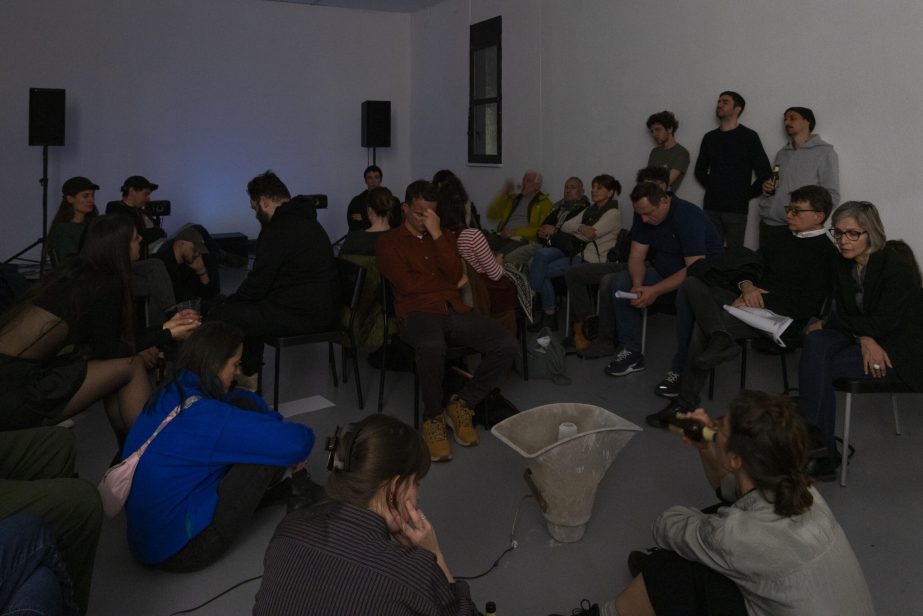
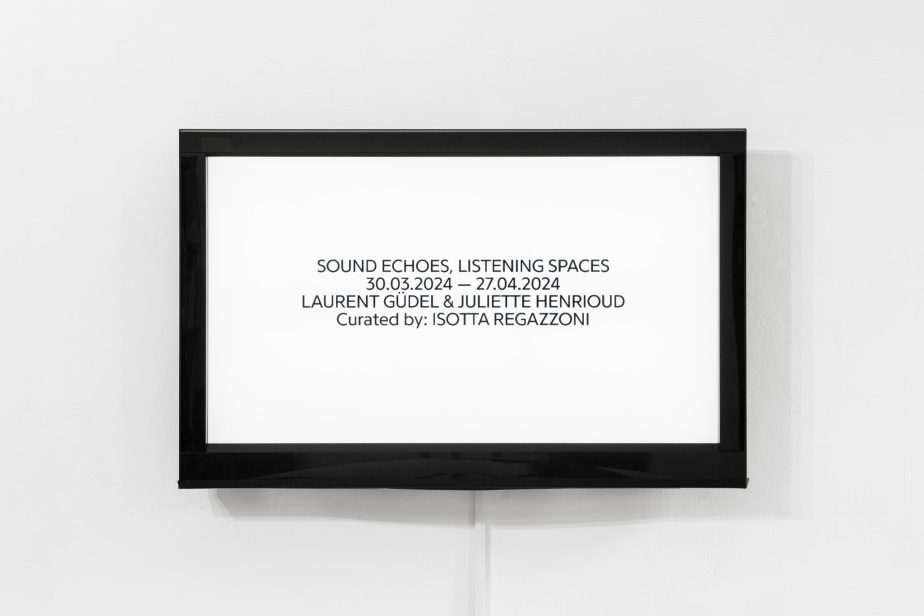
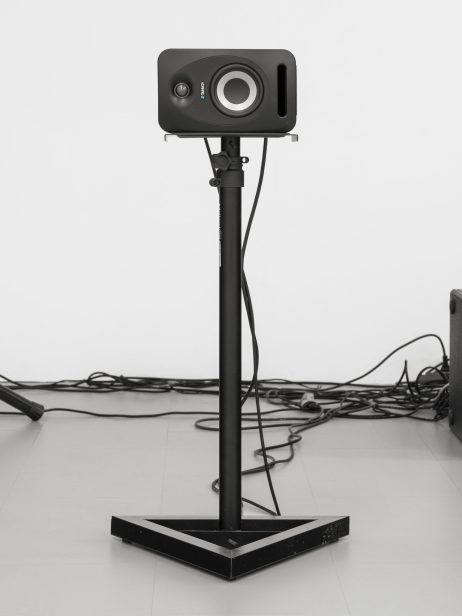
For «Sound Echoes, Listening Spaces», a duo show with Juliette Henrioud at La Rada in Locarno, I chose three places that are emblematic of Ticino’s sound culture to create an electroacoustic composition. First, I went to the Monte Ceneri and Isone regions to listen to and record the radio, because the altitude allows better reception of short-wave broadcasts, which make it possible to listen to stations from all over the world.
In those two places, where the transmitters of Radio Monte Ceneri, Radio Svizzera – Rete Uno and Voice of Russia were located, I recorded during military exercises. That’s why the audience could hear mortar, cannon and machine-gun fire, giving them a rather violent perspective on the alpine acoustic environment. And I’m not talking about the four drones and two soldiers that were sent by the army to surveil and control me while I was actually in the public space.
The second place I visit was the village of Gravesano, this village near Lugano was where the first studio for electronic music in Switzerland was built in 1954 by the German conductor Hermann Scherchen. Renowned for its tranquillity, the place was frequented by avant-garde composers and musicians from all over the world. Some composers practiced the then-new practice of field recording. So I wanted to find out what could be heard there today.
To conclude, I collaborated with the Swiss National Sound Archives in Lugano. I set up my microphones in the digitization studios and was able to get my hand on rare and old archives. Including sonic archives of factories and workers on a construction site in Ticino in the 40s, bird songs and dog barks in Gravesano in the 50s, music recorded on acetate, wire, magnetic tape, and even on wax cylinders from the 1910s. I’ve also incorporated and edited all sorts of radio signals and some excerpts related to the history of Ticino and Swiss broadcasting.
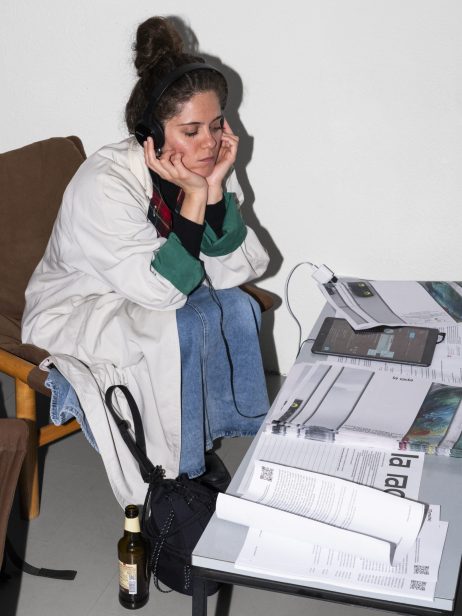
Last but not least, since it was impossible to include all the interesting sonic material in my composition without making it overly indigestible (and for copyright reasons) it’s not possible to listen to all the sources I would have like to share. So, I proposed to the Fonoteca Nazionale to open an “antenna” or a temporary listening station at La Rada and set up a listening point for the duration of the exhibition. Both institutions agreed to play along. I thank them warmly. It was quite exceptional because it was the first collaboration between a sound artist/musician and the Fonoteca. The audience was able to listen to many audio treasures and get lost digging through the database of fonoteca.ch.
Other images by me